The Mortgage Market and Rising Debt
US bank loan delinquencies rose slightly in 2025. The Federal Reserve reported increases across mortgages, credit cards, and student loans. These rates remain historically low, but the trend warrants watching. Data covers the period throughout the last year.
Breaking news
 X Money Launches with High-Yield Savings and Cashback Rewards
 Splitit Announces White-Label Credit Card Launch
 Billing Friction Puts $12.3 Billion in Auto Loan Payments at Risk
 OneSpan Unveils New e‑Signature Features Including Identity Wallets and AI Workflow Support
The overall delinquency rate moved between 1.48% and 1.55%. This represents a small increase from previous years. While still below the ten-year average, the shift indicates potential economic pressure. Analysts are closely monitoring these figures for broader implications.
Mortgage delinquencies contributed to the overall increase. This is despite a generally strong housing market. Experts suggest higher interest rates may be playing a role. Some homeowners are finding it harder to keep up with payments. This is particularly true for those with adjustable-rate mortgages.
Are Student Loans a Growing Concern?
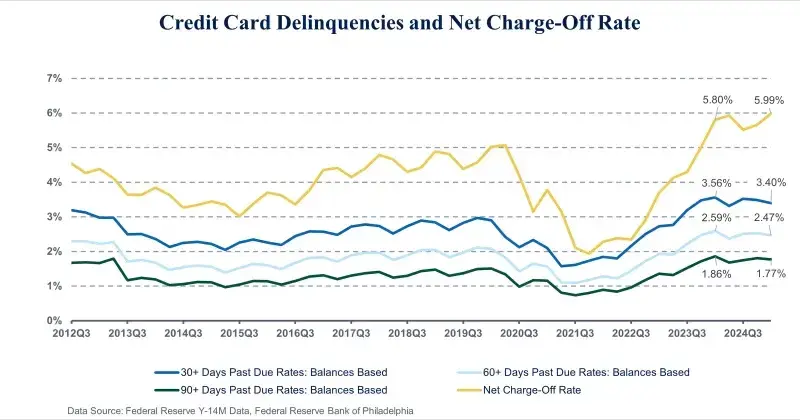
Credit card debt also saw a rise in delinquencies. Consumer spending remained robust throughout 2025. However, a growing number of borrowers are falling behind on payments. This could signal financial strain for some households. The increase is relatively small, but noticeable.
Student loan delinquencies also edged upward. This follows the end of the pandemic-era payment pause. Millions of borrowers are now resuming payments. Many are struggling to integrate these costs into their budgets. This is creating a challenge for both borrowers and lenders.
The Federal Reserve emphasizes that delinquency rates are still manageable. However, they acknowledge the potential for further increases. Continued monitoring is crucial to assess the overall health of the financial system. The current situation doesn’t yet indicate a major crisis.
The modest rise in delinquencies could foreshadow broader economic difficulties. If the trend continues, it might suggest weakening consumer finances. Lenders may become more cautious about extending credit. This could slow down economic growth in the future. Careful observation of these trends is essential for policymakers and financial institutions.
Frequently Asked Questions
What does a delinquency rate measure? A delinquency rate shows the percentage of loans where borrowers are behind on payments. It's a key indicator of financial health for both individuals and the banking system. Higher rates can signal economic trouble.
Is a 1.5% delinquency rate high? No, 1.5% is still relatively low compared to historical averages. However, the recent increase is a signal that needs attention. It suggests a potential shift in consumer financial stability.
What factors contribute to loan delinquencies? Factors include interest rates, economic conditions, and individual borrower circumstances. Job losses, unexpected expenses, and rising debt levels can all contribute to delinquencies.