Regional Pillar Emerges
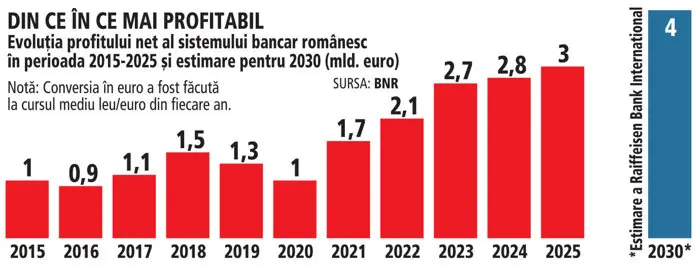
A recent report by Raiffeisen Bank International highlights optimistic trends in Central and Eastern Europe. It emphasizes Romania’s potential to become a key pillar of the regional banking industry. Analysis suggests that by 2030, the domestic banking system could generate annual sums exceeding 4 billion euros. This would consolidate its position as the third-largest market in the region. It ranks immediately after Poland and the Czech Republic. These projections rely on asset volumes and sustainable profit generation capabilities.
Breaking news
 Buyer Beware: Nvidia's Wild Swings Expose Single-Stock ETF Risks
 Money Carer adopts YEO facial recognition to secure vulnerable adults' finances
 Gen Z Heirs Are Abandoning Their Parents' Private Banks
 Chase Blocks Crypto Card Purchases
Historical Peaks and Resilience
Data from the National Bank of Romania shows 2025 marked a historical peak. Aggregate profits surpassed 3 billion euros, equivalent to 15.4 billion lei. Even in the first half of 2026, results showed notable resilience despite economic difficulties. Accumulated profits reached 1.5 billion euros, or 7.4 billion lei. This figure closely matched the previous year’s first-half results. Stability was maintained because banks kept solid financial courses. They often reached record levels despite complex social and political periods.
Interest Margin Drives Revenue
The main driver of these revenues remains the net interest margin. This is the difference between loan interest rates and deposit payments. Last year, persistent inflationary pressure kept rates near 10%. Consequently, costs for local currency loans stayed high. This directly contributed to increased benefits. Regionally, Poland dominated profit distribution, absorbing 37% of total Central and Eastern European gains. The Czech Republic followed with 17%. Hungary held 12%, while Romania accounted for 10%.
Sustained Growth Outlook
The general outlook for the region indicates continuous growth. Banks in Central and Eastern Europe recorded unprecedented cumulative profits of 29.8 billion euros in 2024. This was followed by a new maximum of 31.5 billion euros in 2025. Estimates suggest these high levels will be maintained this year. Support for this dynamic comes from a relatively stable macroeconomic framework. A robust lending cycle also plays a role. Monetary policies favoring profitability contribute significantly. This manifests through European Central Bank rate hikes. National central banks in Eastern Europe also adopt prudent or restrictive stances.