
Multi-Tenant Architecture Simplifies Consumer Onboarding
The shift toward contactless and wearable payments has exposed a critical gap in the consumer experience: most payment apps feel clunky, requiring multiple logins, manual card entry, or fragmented account management. Behind the sleek front-end experience lies a complex web of SaaS platforms handling identity verification, fraud detection, and transaction routing. For consumers, this back-end complexity is invisible, but it directly impacts how fast and smoothly they can pay at a store or transit gate.
Breaking news
 Visa and Samsung Launch QR Payments on Samsung Wallet in APAC
 Mastercard Launches Phone-Based Payment Solution for Small Vendors
 Bangladesh Fintech Must Evolve Beyond Mobile Money
 How Wearable Health Monitors Are Redefining Elderly Safety and Independence
As wearable payment adoption accelerates, the demand for unified, multi-tenant SaaS infrastructure is surging. These platforms allow fintech companies to offer consistent experiences across devices while managing the heavy lifting of data security and compliance. Understanding this ecosystem helps consumers appreciate why their payment apps work the way they do.
Multi-tenant SaaS platforms allow a single software instance to serve thousands of consumers while keeping their data logically separated.
This architecture is what enables a consumer to switch between bank, wallet, and wearable payment apps without repeating identity verification steps. The consumer experience becomes seamless because the platform handles the complex data routing behind the scenes.
AI-Driven Fraud Detection Protects Wearable Transactions
For wearable payment providers, this means faster onboarding flows. A consumer can link their smartwatch or ring to their bank account in under two minutes, with the SaaS platform managing the secure tokenization and biometric authentication. The result is a frictionless setup that encourages wider adoption of wearable payments.
Companies like dezvoltare software build these multi-tenant systems, providing the scalable infrastructure that consumer fintechs rely on to deliver reliable payment experiences at scale.
Every time a consumer taps a smartwatch or payment ring, the SaaS platform runs a real-time fraud check. Machine learning models analyze transaction patterns, device fingerprints, and behavioral biometrics to flag anomalies before the payment clears.
This invisible layer of protection is critical for consumer confidence in wearable payments.
Modern SaaS platforms integrate AI-driven fraud detection directly into the payment flow. When a consumer initiates a transaction, the system evaluates risk factors such as location, time of day, and spending velocity. If the risk score exceeds a threshold, the platform can trigger a step-up authentication, such as a fingerprint or PIN prompt, without disrupting the payment process.
Performance Marketing Drives Wearable Payment Adoption
For consumers, this means their wearable payment devices are protected by sophisticated AI systems that work in milliseconds. The technology is invisible, but it is what makes consumers comfortable using their smartwatches and rings for everyday purchases.
The rapid growth of wearable payment apps is fueled by performance marketing campaigns that target consumers who are already using smartwatches or payment rings.
These campaigns use AI-driven audience segmentation to deliver personalized messaging that highlights the convenience and security of wearable payments.
For consumers, this means seeing targeted ads on social platforms and search engines that speak directly to their existing device usage. The messaging emphasizes real-world benefits: paying with a tap of a ring or watch, no need for a physical card or phone. This targeted approach accelerates adoption by reaching consumers at the exact moment they are considering a new payment method.
Behind these campaigns, SaaS platforms manage the data pipelines and attribution models that measure campaign effectiveness. This ensures that marketing spend is directed toward the consumers most likely to adopt wearable payments, making the technology more accessible to a broader audience.
Real-World Usage: Paying at the Grocery Store
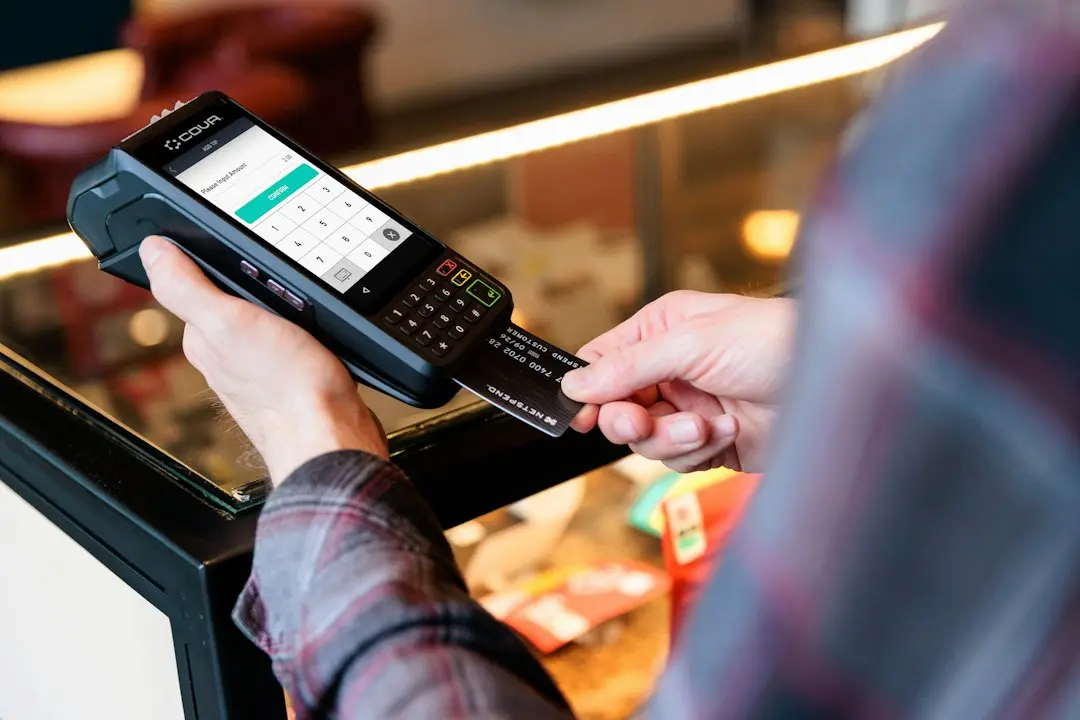
Consider a consumer standing at a grocery store checkout. They hold up their payment ring, and the transaction clears in under two seconds.
Behind that simple action, the SaaS platform has processed identity verification, fraud checks, and transaction routing across multiple systems. The consumer experiences a seamless payment, unaware of the complex orchestration happening in the background.
This real-world scenario illustrates how SaaS infrastructure enables the consumer payment experience. The platform handles the heavy lifting of data security, compliance, and fraud detection, allowing the consumer to focus on the simplicity of the payment itself. As wearable payment adoption grows, the role of SaaS platforms in making these transactions fast, secure, and reliable will only become more prominent.
For consumers, the key takeaway is that the smoothness of their wearable payment experience depends entirely on the quality of the SaaS infrastructure behind it. As platforms continue to evolve, consumers can expect even faster, more secure, and more intuitive payment experiences with their wearable devices.